

<div data-elementor-type="wp-post" data-elementor-id="1306" class="elementor elementor-1306" data-elementor-post-type="post">
<section class="elementor-section elementor-top-section elementor-element elementor-element-497c5aec elementor-section-boxed elementor-section-height-default elementor-section-height-default" data-id="497c5aec" data-element_type="section" data-e-type="section" data-settings="{"shape_divider_top":"mountains"}">
<div class="elementor-shape elementor-shape-top" aria-hidden="true" data-negative="false">
<svg xmlns="http://www.w3.org/2000/svg" viewBox="0 0 1000 100" preserveAspectRatio="none">
<path class="elementor-shape-fill" opacity="0.33" d="M473,67.3c-203.9,88.3-263.1-34-320.3,0C66,119.1,0,59.7,0,59.7V0h1000v59.7 c0,0-62.1,26.1-94.9,29.3c-32.8,3.3-62.8-12.3-75.8-22.1C806,49.6,745.3,8.7,694.9,4.7S492.4,59,473,67.3z"/>
<path class="elementor-shape-fill" opacity="0.66" d="M734,67.3c-45.5,0-77.2-23.2-129.1-39.1c-28.6-8.7-150.3-10.1-254,39.1 s-91.7-34.4-149.2,0C115.7,118.3,0,39.8,0,39.8V0h1000v36.5c0,0-28.2-18.5-92.1-18.5C810.2,18.1,775.7,67.3,734,67.3z"/>
<path class="elementor-shape-fill" d="M766.1,28.9c-200-57.5-266,65.5-395.1,19.5C242,1.8,242,5.4,184.8,20.6C128,35.8,132.3,44.9,89.9,52.5C28.6,63.7,0,0,0,0 h1000c0,0-9.9,40.9-83.6,48.1S829.6,47,766.1,28.9z"/>
U.S. Law Allows Deepfakes
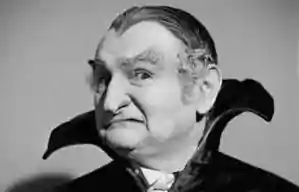
Per Wikipedia the right of publicity, often called personality rights, is the right of an individual to control the commercial use of his or her name, image, likeness, or other unequivocal aspects of one’s identity.
Can we avoid being held liable for infringing on one’s rights of publicity? Is the picture of Grandpa Munster used on this website after being found and archived by Google’s collection of images and reused herein an infringement? Mr. Edward H. Rosenthal has the following to say on the subject…
The Right of Publicity
August 2014
Edward H. Rosenthal
Frankfurt Kurnit Klein & Selz, P.C.
488 Madison Avenue New York, New York 10022 (212) 826-5524
MEDIA EXCEPTION
Truthful advertising of the content of a publication is protected by the First Amendment, provided that the advertising is a truthful description of the content of the medium. Montana v. San Jose Mercury News, Inc., 34 Cal. App. 4th 790, 40 Cal. Rptr. 2d 639 (6th Dist. 1995) (newspaper’s use of a poster of football star permissible as advertising of its content).
Under state laws, the person used must be a subject presented or discussed in the publication. See, e.g., Lane v. MRA Holdings, supra (“Girls Gone Wild” video); Cohn v. Nat’l Broad. Co., 50 N.Y.2d 885, 430 N.Y.S.2d 265 (1980) (use of Roy Cohn’s name in advertising TV movie about Senator Joseph McCarthy that included Cohn was permissible). In addition, the advertising must be limited to an explanation or illustration of the content of the publication.
Namath v. Sports Illustrated, 48 A.D.2d 487, 371 N.Y.S.2d 10 (1st Dep’t 1975) (Sports Illustrated subscription advertising could use Joe Namath’s picture and name in describing coverage of Namath); see Booth v. Curtis Publ’g Co., 11 N.Y.2d 907, 228 N.Y.S.2d 468 (1962); Stern v. Delphi Internet Services Corp., 165 Misc.2d 21, 626 N.Y.S.2d 694 (N.Y. Sup. Ct. 1995) (use of the subject of chat in advertising of an online chat service is permissible).
However, a medium cannot use any photograph merely because it has appeared in the medium, and it cannot use the people who appear in publication as models or endorsers. See Gritzke v. M.R.A. Holding, LLC, No. 4:01CV495–RH, 2002 WL 32107540 (N.D. Fla. Mar. 15, 2002) (“Girls Gone Wild” video package); Velez v. VV Publ’g Corp., 135 A.D.2d 47, 524 N.Y.S.2d 186 (1st Dep’t 1988) (Village Voice newspaper cover).
If the advertising falsely describes the nature of the publication it may be actionable. Cher v. Forum Int’l, Ltd., 692 F.2d 634 (9th Cir. 1982) (false claims in ad promoting an interview of Cher in a magazine resulted in violation of her publicity rights.